THE SMARTER CHARGING SERIES · 5 MIN READ
What is dynamic load management?
Your home and your EV should work together. Smart load management adjusts charging as other electrical demand changes.
Explore the guide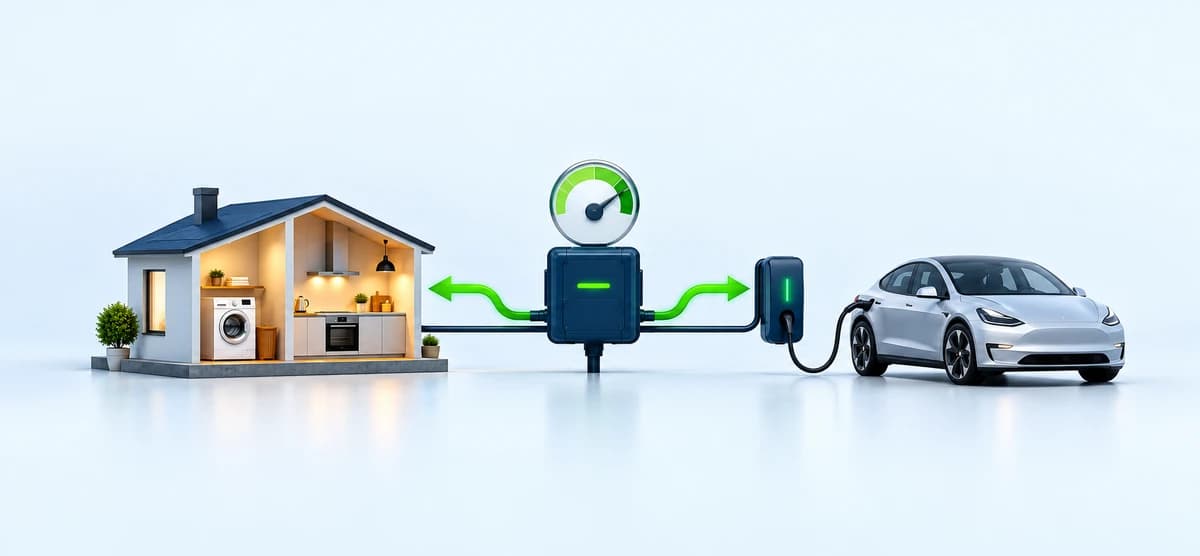
ONE IDEA. THREE SIMPLE STEPS.
How it comes together.
- 01
Monitor
A compatible meter measures changing site demand.
- 02
Adjust
The controller changes the power available to charging.
- 03
Recover
Charging can increase again as other demand falls.
CHAPTER 01
More demand at home. Less power to the car.
Dynamic load management monitors home or building consumption and adjusts supported EV charging within a configured limit. When appliances increase demand, charging may slow or pause. When demand drops, more capacity can become available to the vehicle.
CHAPTER 02
Three terms worth separating
- Static limiting: a fixed charging ceiling, regardless of changing household demand.
- Dynamic management: adjusts charging in response to measured site demand.
- Multi-charger sharing: distributes an allocation between vehicles; confirm whether it also responds to building demand.
CHAPTER 03
A simple way to picture the change
Imagine a professionally configured site limit of 10 kW. With other demand at 3 kW, the theoretical headroom is 7 kW. If other demand rises to 6 kW, it falls to 4 kW. These are simplified figures, not recommended settings: phase limits, margins, vehicle acceptance and hardware ratings still apply.
CHAPTER 04
What to confirm before installation
Ask for a complete solution
- Written confirmation that the exact charger supports the proposed load-management mode.
- Compatible meter or sensors, communication wiring and required accessories.
- Assessment of available supply, phases, parking layout and future chargers.
- What the charger does if meter communication is lost.
- Testing, commissioning and responsibility for ongoing support.
CHAPTER 05
Make a useful site brief
For a home, office or shared parking area in Pakistan, describe when vehicles arrive, how long they stay and the main equipment in use at the same time. Include planned expansion. Give this brief to your installer; do not select protective-device ratings or supply settings from an online example.
GOOD QUESTIONS. CLEAR ANSWERS.
Before you choose.
Will my car always charge at full speed?
No. The purpose is to adapt charging to available headroom. Actual speed also depends on the vehicle, charger and electrical installation.
Can this avoid a supply upgrade?
It may help in some installations, but it is not a guarantee. A professional assessment must establish whether the existing supply can meet your needs.
Can it work with solar charging?
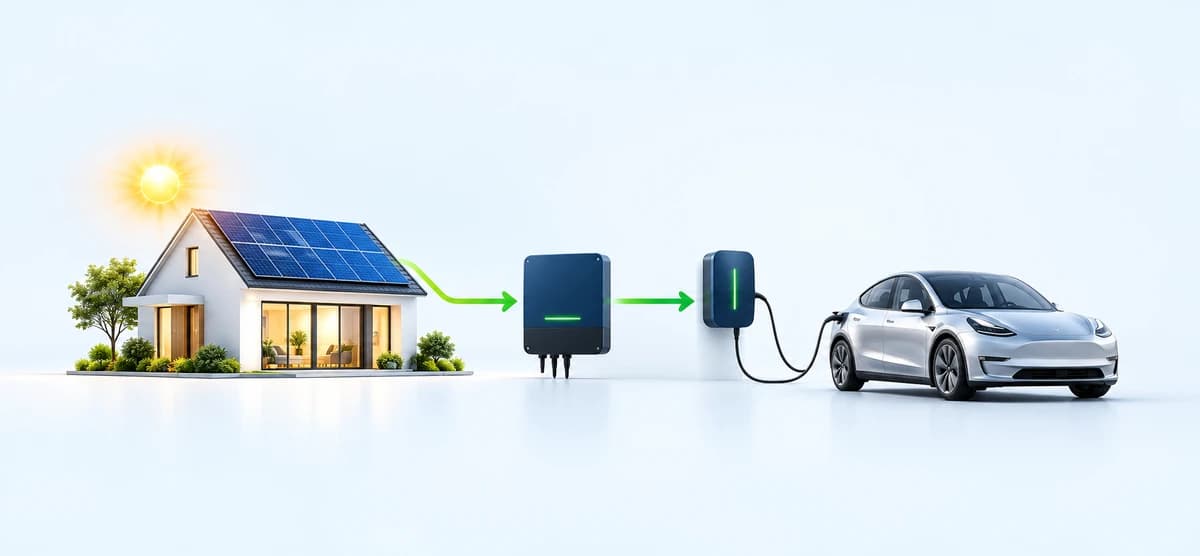
Some systems support both, but compatibility varies by model and installation. Confirm the supported combination, especially for multiple chargers, before buying.
MAKE YOUR NEXT STEP A SMART ONE
Find the right fit for your setup.
Tell us about your parking, vehicle and electrical supply. A qualified site assessment is needed before installation.